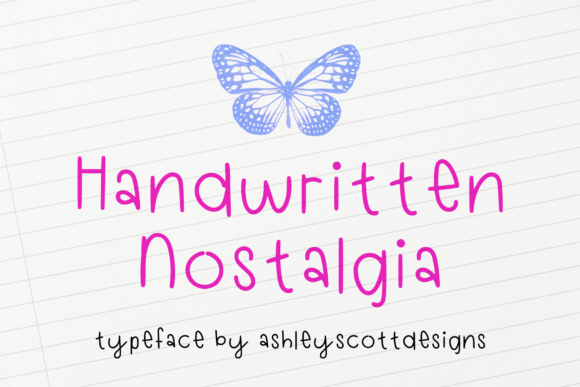
Handwritten Nostalgia: Adding Retro Charm to Your Designs
Capturing the Whimsy of a Bygone Era
There's a distinct warmth that comes from remembering the notes passed between desks in study hall, the secret diaries with tiny locks, and the endless doodles covering the margins of your school notebooks. Handwritten Nostalgia is a typeface designed to bottle that specific feeling of 90s and early 2000s youth. It isn't just a font; it is a visual time machine that translates the carefree energy of gel pens and loose-leaf paper into modern design assets.
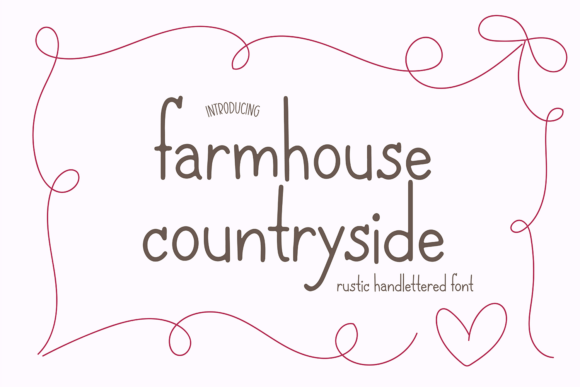
Unlike rigid geometric typefaces, this premium font embraces the imperfections of the human hand. The letterforms exhibit a natural bounce and irregular baseline, mimicking the speed and casual nature of authentic handwriting. You will notice varying stroke weights and slightly uneven spacing, which are the very details that give it character. It avoids the stiffness of digital precision, making it a perfect creative font for projects that need to feel approachable and genuine. When you look at the curves and loops of Handwritten Nostalgia, you see the personality of a script font that values connection over corporate perfection.
Practical Applications for Modern Creators
For designers, entrepreneurs, and content creators, finding the right aesthetic is about matching the tool to the message. Handwritten Nostalgia serves as a versatile display font that shines in specific scenarios. It is not intended for long blocks of body copy where a serif font or sans serif font would excel. Instead, its strength lies in grabbing attention and setting a mood immediately.
Consider using this typeface for packaging design, particularly for artisanal goods, bakeries, or products targeting a millennial demographic that appreciates vintage aesthetics. It works beautifully on coffee cups, tote bags, and product labels where a human touch adds perceived value. In editorial design, Handwritten Nostalgia can be used for pull quotes, chapter titles, or magazine headers to break up the monotony of standard typography. It adds a layer of storytelling before the reader even engages with the paragraph text.
Digital spaces benefit greatly from this style as well. If you are building a brand identity for a lifestyle blog, a stationery shop, or a creative agency, this font can anchor your visual language. It is particularly effective for social media graphics where you need to stop the scroll. The informal nature of the text feels native to platforms like Instagram or Pinterest, making your content feel less like an advertisement and more like a recommendation from a friend.
Strategic Pairing and Visual Hierarchy
Using a handwritten font effectively requires a bit of strategy, especially regarding visual hierarchy. Because Handwritten Nostalgia has such a strong personality, it demands contrast. If you pair it with another decorative font, the design will likely become chaotic and difficult to read. The best approach is to balance this expressive typeface with something clean and grounded.
A classic font pairing strategy is to combine Handwritten Nostalgia with a neutral geometric sans serif font. The simplicity of the sans serif allows the handwritten headers to pop without competing for attention. Alternatively, pairing it with a traditional, sturdy serif font can create an interesting juxtaposition between formal and casual, often used in web design to guide the user's eye from the emotional hook to the informational content.
Readability is a crucial consideration. While this font is legible at larger sizes, you must be careful with sizing and color contrast. Avoid placing this text over busy photographic backgrounds without a solid background shape or overlay to ensure the letters remain distinct. In logo design, Handwritten Nostalgia works best when kept relatively simple; adding too many swashes or ligatures might complicate the silhouette of the logo, especially at small sizes on mobile screens.
Evaluating Fit and Licensing
Before integrating any new typeface into your toolkit, it is wise to evaluate its technical capabilities. Handwritten Nostalgia includes various styles that allow for customization. Checking the glyph map is a practical step; look for alternate characters and ligatures that can help you avoid the "cookie-cutter" look where two identical letters sit next to each other. Using these alternates helps maintain the illusion of authentic handwriting.
For small business owners and entrepreneurs, understanding the commercial license is non-negotiable. If you plan to use Handwritten Nostalgia on merchandise for sale—such as t-shirts, mugs, or digital templates—you need to ensure your license covers that usage. Most commercial font licenses are straightforward, but verifying the terms for server installation or app embedding is a professional necessity. Treating your typography as a valuable asset rather than a disposable element protects your business in the long run.
Ultimately, Handwritten Nostalgia is more than just a retro font; it is a tool for emotional connection. It taps into a shared cultural memory of the analog era, making it a powerful asset for brands looking to humanize their digital presence. Whether you are designing a wedding invitation, a website header, or a social media campaign, this typeface offers a way to communicate with warmth, whimsy, and a distinct touch of personality.